
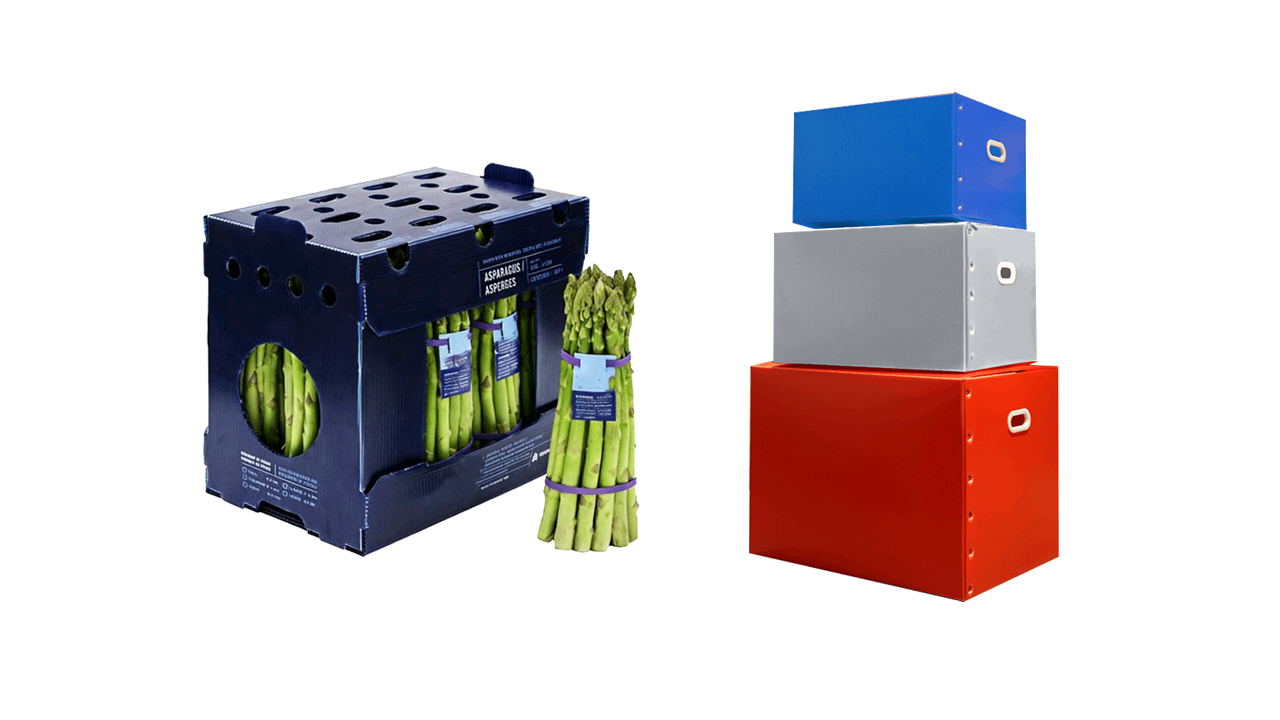
Diverse industries in Canada need packaging that can protect their goods, survive tough handling conditions, and keep operational costs low. PP Corrugated plastic boxes provide a light-weight, moisture-resistant, and reusable solution to your packaging needs. Knowing how they work and their applications will enable you to achieve maximum efficiency.
1. Insight into Canada’s Market for PP Corrugated Packaging
1.1. Market Demand
Canada’s packaging market serves agriculture, manufacturing, food processing, logistics, and retail. Statistics Canada reported that Canadian cardboard container manufacturers generated CAD $7.9 billion in sales in 2022. Although this figure concerns cardboard containers rather than PP corrugated packaging, it demonstrates the scale of Canada’s established packaging industry.
1.2. Canadian Weather
Canada’s diverse climate presents packaging problems like freezing winters and humid summers along with condensation inside refrigerated units. Your PP corrugated boxes do not absorb water easily and therefore work well in moist climates. However, polypropylene impact resistance may lower when the temperature goes down; therefore, the right material grades must be chosen and boxes tested in real operating conditions.
High-impact PP block copolymer is the right choice for your corrugated boxes in cold weather conditions.
1.3. Comparison to Traditional Packaging
As opposed to traditional cardboard, PP corrugated packaging is more resistant to water, has more reuse possibilities, and can be easily cleaned. Cardboard could be cheaper to buy at first and could be used only once. You need to compare their durability, protective qualities, replacement rate, and overall cost per usage.
1.4. Environmental Considerations
PP corrugated boxes can help cut down the need for new packaging since they will have gone through several cycles successfully. According to Statistics Canada, in 2021, plastic packaging comprised 28% of all plastic products produced for consumption in Canada. The results of recycling will depend on the material, contamination, and availability of facilities.
2. Main Uses of PP Corrugated Packaging in Canada
2.1. Agriculture and Horticulture
For those in the agriculture industries in British Columbia, Ontario, and Quebec, your products include berries, apples, mushrooms, vegetables, and greenhouse crops. PP corrugated boxes can be used for harvesting, reuseable plastic shipping boxes, and plastic divider boxes. The water resistant properties allow the packaging to stay intact in moist environments while the holes will aid ventilation for selected fresh produce.
2.2. Logistics and Warehousing in Canada
If you are in logistics companies, then you will require packaging which is able to resist the handling process inside your warehouses, distribution centers, and manufacturing units. You can use PP corrugated boxes and plastic storage boxes for organizing your components, protecting your products, and making the transport process easy.
2.3. Cold Chain, Seafood, and Meat Industries in Canada
Seafood and meat industries have cold chain operations, which involve products that could damage paperboard packaging due to condensation. PP corrugated packaging is moisture-resistant and can be customized to suit your transport purposes. You should check the cold chain performance, cleaning, load weight, and food contact approval for each application.
2.4. Electronics and Anti-Static Packaging in Canada
If you are in electronics manufacturing, you will need packaging to protect your circuit boards, connectors, and other components from damage and electrostatic discharge. ESD PP corrugated boxes may be made with custom dividers and, when properly formulated, they have anti-static or electrostatic dissipative characteristics. PP corrugated sheets do not come standard with ESD protection, so make sure you ask for testing reports.
2.5. Medical and Healthcare Supplies in Canada
Healthcare suppliers in Canada supply medical devices, diagnostic devices, and other products which need to be packaged in an organized and safe manner. PP corrugated packaging can be used for this purpose in appropriate situations. It is important you verify the requirements for medical devices in Canada, including the cleaning and sterilization process before choosing packaging.
2.6. E-Commerce and Retail Distribution in Canada
According to Statistics Canada, the value of e-commerce retail sales in Canada was CAD $63.7 billion in 2022. PP corrugated boxes can be used for order-picking containers, returnable transport packaging, and warehouse storage. If your clients have repeated cycles of delivery, then reusable boxes could save on replacement buys.
2.7. Packaging of Food Processing Products in Canada
If you are in food processing, you need packaging that is durable enough to withstand the rigors of handling, moisture, and frequent transport between manufacturing and storage locations. PP corrugated boxes can be used for secondary packaging, ingredient containers where appropriate, and separation of products. For direct contact with food, you should confirm the suitability of the material.
2.8. Packaging for Beverages in Canada
If you are Beverage manufacturers and distributors, you will have to handle bottles, cans, and other forms of containers when filling, stocking, and transporting. With PP corrugated packaging, you can be sure of having reusable dividers, protection trays, and transportation boxes. Such packaging will help ensure that there is reduced movement of each product. You need to conduct a test on the design using weight, stack height, and vibration.
2.9. Glass and Plastic Bottle Manufacturers in Canada
If you manufacture glass and plastic bottles, then you should have packaging that ensures the separation of bottles in order to protect them during shipping. You can go for customized layer pads made of PP corrugated sheets and partitioned boxes. The appropriate thickness of the sheet and box strength will depend on the weight of your bottles.
3. What should you keep in mind when supplying Canada’s market?
3.1. Box Size and Weight Capacity
The size of your boxes must be in line with your product, pallet, and storage system. Consider the length, width, height, weight of your product, stacking height, and transportation time. For instance, when you have a pallet of 1,200 × 1,000 mm, your box sizes must match those of the pallet. When your boxes carry 20 kg loads or stack to five levels, ask for load and stacking tests.
3.2. Sheet Thickness and Material Grade
The typical thickness of your PP corrugated packaging is 2-5 mm, and the typical weight is 250-800 gsm. Considering the cold climate of Canada, it would be wise to use impact resistant grades of polypropylene that can withstand low temperatures. The appropriate thickness for light load packaging is 2-3 mm while that of heavy load packaging is 4-5 mm.
3.3. Folding and Storage
Folding PP corrugated boxes helps you to reduce the volume needed for storage and also cuts down on the cost of your returning boxes when they empty. Nevertheless, the folding system must be strong enough to allow multiple assemblies without tearing up the sheets or weakening the joints. Always carry out tests before placing your orders.
3.4. Provincial Requirements
Ontario, British Columbia, and Quebec operate under the Canadian federal system. However, they have different policies regarding environmental concerns and packaging regulations. Quebec has extended its requirements regarding producer responsibility in packaging, while both British Columbia and Ontario have developed recycling systems and producer responsibility. It is necessary you clarify specific requirements regarding the product, importer, and distribution method in each province.
3.5. Canadian Regulations and Packaging Compliance
When importing PP Corrugated Packaging to Canada, you need to check your HS code, import needs, and customer requirements. You can prepare the commercial invoice, packing list, and certificate of origin as appropriate. In the case of food-contact packaging, make sure to obtain FDA certification and check other requirements as per Health Canada guidelines.
3.6. Recycling and Producer Responsibility
The requirements for recycling of packaging material in Canada differ according to jurisdiction and may be dependent on who imports, distributes, or sells the product. Check if your company is required to register, report, or finance through producer responsibility. PP corrugated boxes can be recyclable in areas with the right facilities, but check your local acceptability first.
4. How Can PP Corrugated Packaging Improve Cost Efficiency?
4.1. Comparison of Total Cost per Use
Let’s take an example for comparison: a cardboard box will cost you CAD $2 per use whereas a reusable PP corrugated box will cost you CAD $10 but make 20 successful uses. Thus, the PP box will cost you CAD $0.5 per use, that is, a possible 75% reduction in the packaging purchase cost.
4.2. Reduce the Cost of Replacement and Damage
By using water-resistant PP corrugated boxes, you may reduce replacement cost for your packaging, particularly in wet or cold environments. Moreover, by using its custom partition design, you can avoid the displacement of your goods during transport. The exact savings would depend on your current packaging, product, and environment.
5. Choosing the Right Supplier: Local or Overseas?
5.1. Local vs. Foreign Sourcing
Canadian suppliers can give you quicker delivery, better communication, and cheaper local freight charges because of your small order size. On the other hand, foreign suppliers might give you cost-effective production, lots of customization, and greater manufacturing capabilities. Consider the total landed cost that includes freight, duties, taxes, inspection, lead times, and inventory holding costs.
5.2. Quality Control and Certification
You have to request quality control documents, product specifications, and inspection certificates. ISO 9001 certification is the evidence of a quality management system but not the evidence that all boxes will fit your application requirements. CSA standards apply when relevant, and BRCGS certification may be required for packaging products. FDA documentation applies only when relevant.
6. Frequently Asked Questions
Q1: What is the best way to keep an eye on your corrugated plastic box fleet across Canada?
The best way to do this is through embedding RFID tags or barcode slots in your custom boxes. Your team will be able to scan the shipments right away and prevent any transit losses.
Q2: How do UV-resistant corrugated plastic boxes maximize the efficiency of your outdoor storage throughout Canada?
Your boxes will not degrade due to excessive exposure to summer heat or harsh winter light. With no cracking occurring because of UV protection, your outdoor staging area will stay organized and your items safe.
Q3: How can circular economy initiatives enhance your bulk purchase operations in Canada?
You could join hands with local producers in the recycling of your old/damaged corrugated plastic boxes for making new sheets out of them. It is an economical approach for reducing the cost of replacement of material in the future.
Q4: How does your ocean freight benefit from moisture-resistant corrugated plastic boxes in Canada?
Your imports will be safe from excessive moisture, saltwater, and condensation while being transported through the sea. Your boxes will never get wet and will not lose their strength, making sure that your cargo is in perfect condition upon arrival in Canada.
Q5: How do you ensure optimal stacking performance in your humid Canadian distribution centers?
You can depend on twin-wall corrugated plastic cross fluting for handling heavy loads vertically even when moisture is at its peak. These boxes will remain intact throughout the stacking because they don’t buckle like paper boxes do.
7. Conclusion
PP corrugated box gives you options in terms of making your packaging stronger, moisture-proof, and reusable. By considering the climate, requirements, provincial obligations, and landed cost, you can choose the right type of packaging and develop good business relationships with your suppliers. Please visit us at PurePack to learn more about your packaging.