
Selecting the right sign material is an essential step that enables you to achieve a perfect balance between cost, appearance, longevity, weight, and application. When you are looking for indoor or outdoor signs, you should evaluate the environment, mounting type, life expectancy, and maintenance requirements. This article will help you analyze different sign materials.
1. 9 Common Sign Materials Types
There is no single material that can be used for all signs. It will be important for you to select the materials based on their location, durability, aesthetics, printing process, installation, and costs.
1. PP Corrugated Sheets
l Characteristics
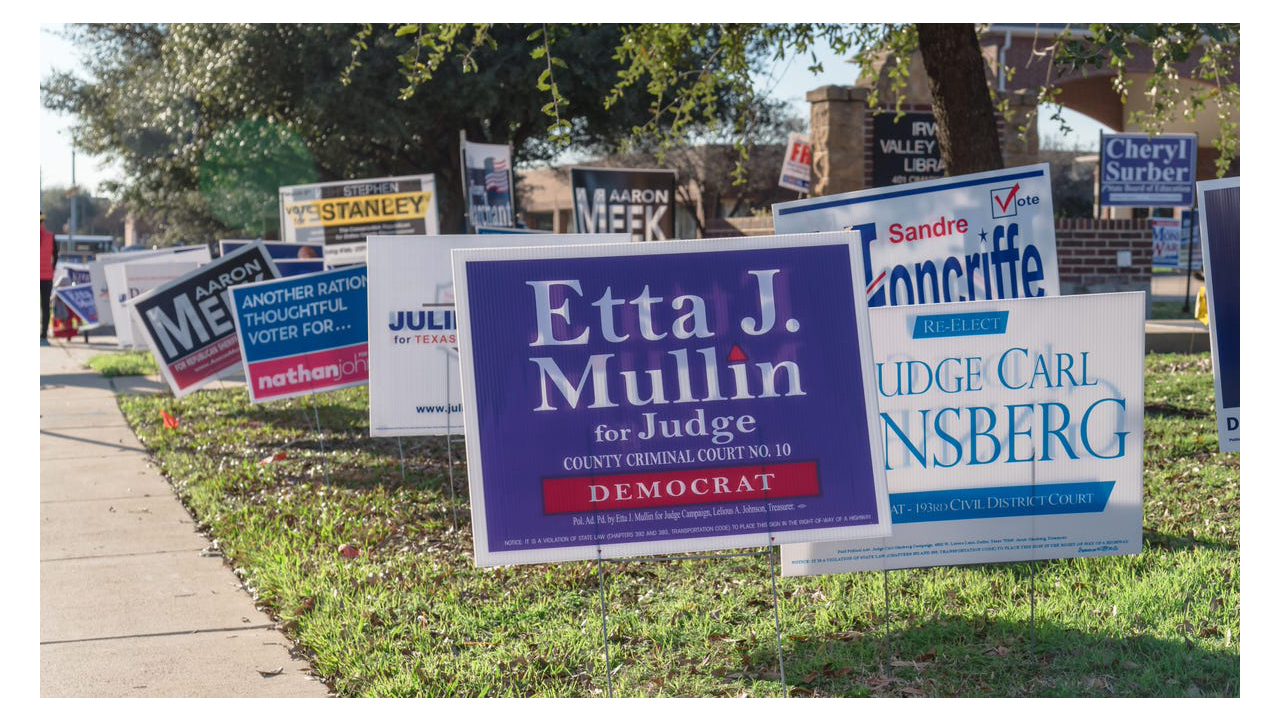
PP corrugated sheets provide you with a lightweight, waterproof, moisture – resistant, Eco-friendly and economical way of making signs. You have the option of selecting between different thicknesses ranging from 2 – 6 mm depending on your requirements. You also have the option of selecting different sizes and colors according to your requirements. With an average weight range of 350 -1,200 g/m2, your signs are easy to handle and transport. If you require enhanced printability, corona treatment helps in doing screen or UV digital printing. When exporting, your sheets can be packed in PE film, cardboard, corner protectors and pallets.
l Application
PP corrugated signs can be used as yard signs or real estate signs, construction signs or directional signs, events, promotional displays, retail advertising, POP displays, and safety panels. These are ideal when you need a cost-effective product for your temporary or semi-permanent indoor or outdoor signage requirements.
l Why Choose PP Corrugated Signs?
You should choose PP material for your signage if you would like to save money on both materials and transportation. The advantages of PP are low weight, ease of installation, and moisture resistance. The disadvantages of PP are lower rigidity and less premium look than PVC, acrylic, and ACM.
PP corrugated signs typically cost $0.80–$8+ per sq. ft., depending on your printing needs and order quantity. PP is lightweight and moisture-resistant material, it suits temporary outdoor use. Your signs can generally last 3-12 months outdoors, and UV stabilization can help extend their lifespan to 1-3+ years.
2. PVC (Polyvinyl Chloride ) Sheets
l Characteristics
PVC Sheets provide you with a rigid, smooth and fabricating surface. Thickness ranges from 1 to 12 mm. Standard sizes include 1220 x 2440 mm and 1560 x 3050 mm. Other sizes are also available on demand. You can also select various colors and finishes, which include UV printing, screen printing, vinyl, painting and laminating.
l Applications
PVC sheets can be used for making signage including retail signs, point of sale display signage, menu boards, exhibition boards, wall art, real estate signs, directional signs, door plaques, and dimensional lettering.
l Why Choose PVC Signs?
Choose PVC when you need more sturdy signage compared to PP corrugated. You get better printability and fabrication ability, but expect your PVC signs to be more expensive and heavy. The usual price is approximately $7 to $10+ per square foot. Indoor signage can last 3 to 5 years while outdoor signage lasts 2 to 5 years.
3. Acrylic Signs
l Characteristics
Acrylic provides you with an excellent quality, premium, clear, and smooth surface finish. Acrylic signs come in the options of 2-10mm thickness and finishes such as clear, translucent, opaque, frosted, colored, and mirror. You can customize your signs with acrylic via UV printing, screen printing, vinyl, polishing, frosting, and laser cutting.
l Applications
Acrylic can be used for retail signs, backlit signs, menu boards, reception signs, point-of-sale displays, exhibit graphics, dimensional lettering, and decorative panels.
l Why Choose Acrylic Signs?
You should go for acrylic when you require a high-quality visual presentation. Advantages include superior clarity, premium quality, and longevity. Nevertheless, it is usually heavy and expensive compared to PP and PVC. Your average price will be between $15-$30+, depending on thickness and customization. Acrylic signage will serve you for about 5-10 years and even more.
4. Aluminum Composite Material (ACM) Sheets
l Characteristics
ACM offers a flat, stable, and weather-resistant surface for signs. You can select 3 mm for regular applications or 4-6 mm for your bigger signs where you require more stability. You can also choose between colors, finishes, and coatings. PE coating is good for regular signs, while PVDF coating provides more durability outdoors.
l Applications
ACM can be used for building signs, corporate signs, real-estate signs, way-finding signs, shop signs, outdoor signs, POS graphics, and exhibition graphics.
l Why Choose ACM Signs?
ACM can be used when you want long-term performance and a professional look. Compared to PP material, ACM signs have better durability and rigidity. However, they cost a bit more than PP corrugated signs. ACM signs typically cost about $9-$12+ per square foot based on coating and printing. ACM signs that are properly coated and installed will last about 7-10+ years, depending on weather, UV exposure, and maintenance.
5. Foam Board
l Characteristics
You get an extremely lightweight and easily manageable substrate with the use of foam board for indoor displays. You have the option of choosing either 5 mm for regular displays or 10-13 mm if you need more durability in your larger displays. You can also use processes such as UV or digital printing, vinyl application, and lamination to customize your graphics.
l Applications
Foam board can be used for presentation boards, exhibition graphics, retail display, signage, posters, POP displays, and temporary indoor advertising.
l Why Choose Foam Boards?
You can go with foam board if you want something light weight, easy to handle and affordable. It will be very convenient for transportation and installation, although it is not designed for outdoor purposes and it is not as durable as PVC and ACM. The typical cost involved will be around $7-$10+/sq. ft. For indoor uses, your foam board will have life span of around 1-2+ years.
6. Paperboard / ImageMax Signs
l Characteristics
Paperboard/ImageMax offer you a cost-effective alternative for your indoor signage. These are available in standard thicknesses ranging from 1/8″-1/4″. That makes your signs easily manageable, movable, and even replaceable. Your signs can be printed straight onto the surface to create your promotional signage.
l Applications
You can use these materials for printing posters, retail signs, presentation boards, promotional displays, and other types of indoor signage. They work great for short-term events, presentations, and retail promotions.
l Why Choose Paperboard / ImageMax?
You should select these materials if you want to stay light on the budget and weight. These substrates are cheaper than plastic and metal substrates, although they are not moisture and impact resistant. It will usually cost you about $2-$6+ per square foot. Your signage will normally last for a short period of time. Expect a lifespan of 3–12 months, depending on handling, storage, humidity, temperature, and environmental conditions.
7. Gator Board / UltraBoard
l Characteristics
With Gator Board and UltraBoard, you get a firm and light substrate that is ideal for indoor professional displays. Common thickness varies from 3/16″-1/2″, so you have an opportunity to select a larger thickness if you require your display to have extra stability. Your graphics can be directly printed or mounted onto the surface.
l Applications
Gator Board / UltraBoard can be used for mounted graphics, trade shows, exhibit panels, presentation boards, and indoor signage. These substrates are ideal where your display requires remaining flat through transport and handling.
l Why Choose Board / UltraBoard?
These materials should be chosen if you need stability, but do not want the weight of plastic or metal. The average cost is around $10-$15+/sq. ft., varying with the thickness, graphic mount, etc. Gator Board / UltraBoard displays generally will last 3-5+ years if taken care of. These are more costly than paperboard and not recommended for your outdoor signage.
8. Polystyrene Signs
l Characteristics
Polystyrene is an affordable material that you could use to make temporary and indoor signs. The material thickness ranges between 0.020″- 0.060″. This makes your signs easy to handle, cut, and install. The low cost of materials will help you keep costs down if your project involves more volume.
l Applications
You could use polystyrene to make POP displays, temporary signs, retail graphics, promotional displays, and indoor ads. Polystyrene is especially suitable if your campaign requires signage only temporarily.
l Why Choose Polystyrene Signs?
When lower costs and easier handling take priority over durability, you may consider polystyrene. Common costs range from $3–$7+ per sq. ft., depending on thickness and printing. These signs are typically intended for temporary indoor use, generally lasting 3–12 months depending on handling and environmental conditions. For better rigidity and impact resistance, compare polystyrene with PVC, PP, ACM, or aluminum.
9. Sign Grade Aluminum
l Characteristics
If you need to have an incredibly durable material that can be used to create tough signs, then you need to opt for sign grade aluminum. Based on the strength requirements that you might have, you will be able to choose from the available thicknesses of 0.040”, 0.063” and 0.080”.
l Applications
This type of aluminum is used for the creation of building signs, directional signs, outdoor graphics, parking signs and other outdoor signage.
l Why Choose Sign Grade Aluminum?
You should consider aluminum if you want to have outdoor durability and a long life for your signs. Advantages include durability, dimensional stability, and outdoor performance. Disadvantages are increased material and transportation costs compared to light-weight materials. You should expect to pay $8-$15+/sq. ft. and more for your signage depending on your choices of thickness, coating and printing. Outdoor aluminum signs should last 10+ years.
2. Frequently Asked Questions
Q1. What should you do if you are unsure which material to choose?
Tell your supplier where you want to install your sign, its size, its duration, how it is going to be installed, and under what environmental conditions it is going to operate.
Q2.What is the cheapest and most expensive sign material?
Typically, you can expect basic corrugated plastic to be one of your least expensive sign materials at $0.80-$8+ per square foot. Higher quality rigid materials like acrylic are typically $15-$30+ per square foot. Your cost will vary depending on your supplier and sign specifics.
Q3.How should you handle and install your signs?
Your signs must be handled with care to ensure that they don’t get scratched, cracked, dented or bent. Tape or Velcro is used for Foam Board, ImageMax, and Paperboard. Adhesive or mechanical fasteners should be used for PVC, Acrylic, Gator Board, and UltraBoard. Screws, rivets and bolts should be used for ACM, Aluminum and PP Corrugated.
Q4.What tools can you use to install signs?
You can use a level, measuring tape, pencil, drill, right drill bits, screwdriver, anchors, screws, mounting tape, adhesive, and safety gloves. If your signs are big, you need to get an extra hand or some support for placing them.
Q5.Does storage affect how long your sign will last?
Yes. Proper storage can increase the lifespan of your signs by protecting them from factors such as moisture, heat, sun, pressure, and damage.
3. Conclusion
Selecting the appropriate sign material allows you to get what you need in terms of longevity, appearance, print quality, and price. You need to think about the location of your sign, its size, weight, application, installation, and longevity. Our company, PurePack, specializes in PP Corrugated Sheets, offering you a durable, light, and waterproof solution.