
Choosing the most appropriate cutting method goes beyond increasing the rate of efficiency; it plays a crucial role in determining the quality of the product, wastage, and customer satisfaction level. You need to know how to cut PP corrugated sheets better, these cutting methods to make informed decisions and provide proper technical assistance to your clients.
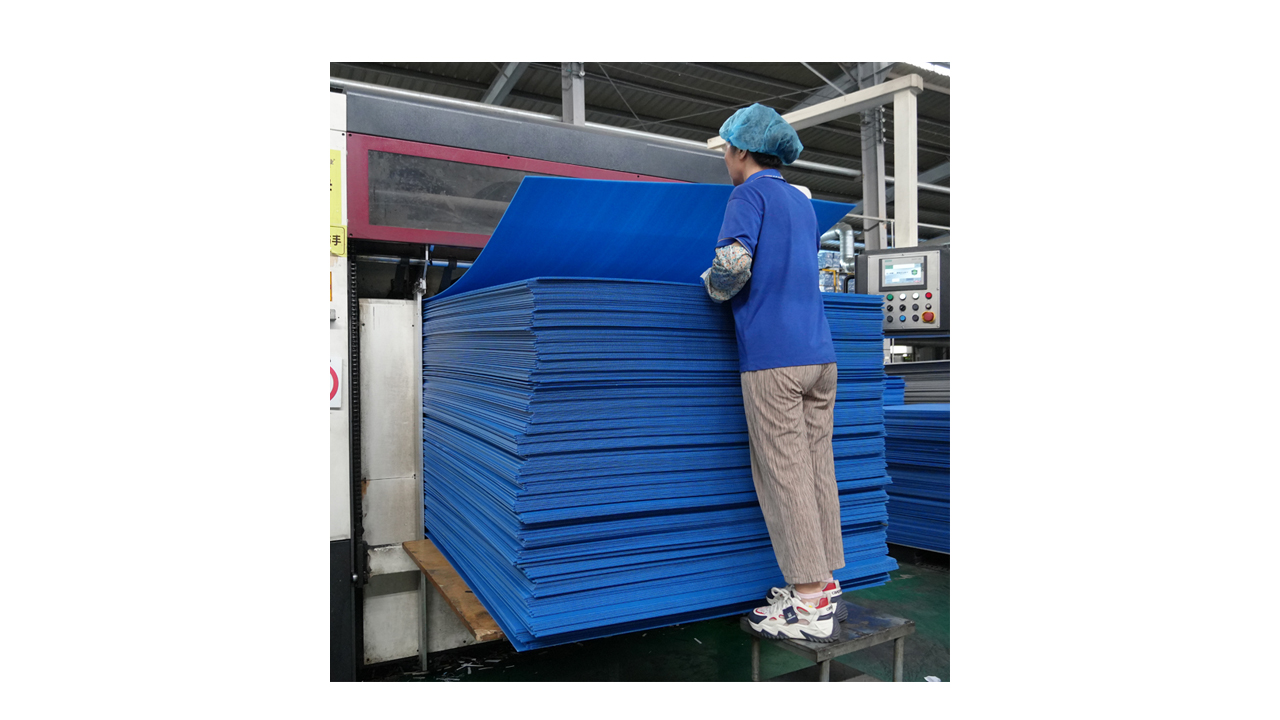
1. Why Cutting Techniques Are Important for Importers
If you are an importer or distributor of PP corrugated sheets, your clients cover different industries such as signs production, packaging, construction, and agriculture, each one requiring a different approach to cutting process.
A poor cutting technique might lead to
- Edge cracking under low temperaturesenvironments
- Unattractive edges that will not look good during retail presentation
- Additional expenses in the form of wasted materials
- Negative feedback from your clients
Cutting knowledge assists you and your customers in
- Giving proper technical support to your customers
- Providing advice for the appropriate cutting tool
- Offering cutting service before actual cutting as an added advantage
- Preventing problems in the future
2. Cutting Method Comparison
| Cutting Method | Suitable Scenarios | Cutting Speed | Precision | Edge Quality | Recommended Blade |
| Utility Knife | Small quantities, sample pieces, thin sheets (≤4mm) | Low | Medium | Good (requires sharp blades) | Regular retractable blade |
| Circular Saw | Medium and large quantities, thick sheets (4–10mm) | High | Medium-High | Good | Fine tooth carbide blade (10–14 TPI) |
| Jigsaw | Cuts that require curved lines, irregular shapes | Medium | Medium | Fair | Fine tooth blade (reverse cut) |
| CNC Routing | Recommended for large quantities and complex designs | High | Very High | Excellent | Single-flute carbide end mill |
| Laser Cutting | Provides smooth cuts and elegant designs | Medium-High | Very High | Excellent | CO₂ laser (good for PP sheets) |
| Die Cutting | The best choice for high production volumes with uniform shapes | Very High | High | Excellent | Custom steel rule die |
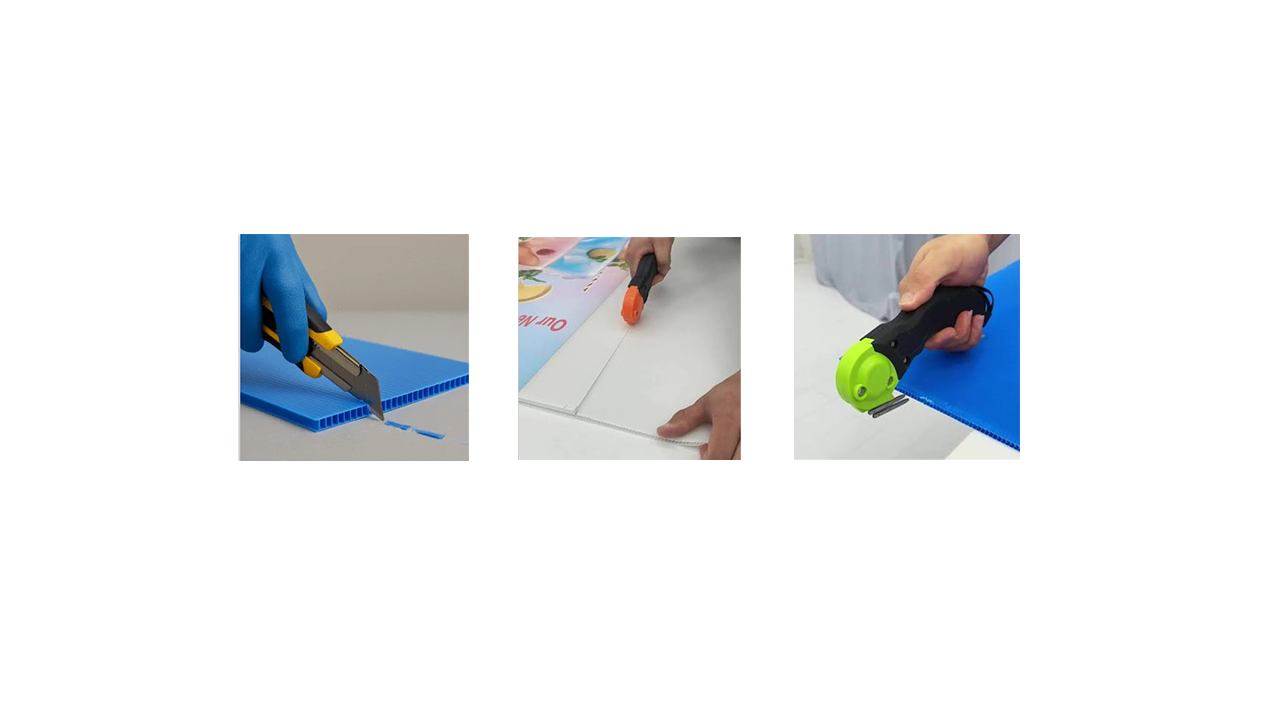
3. Step-by-Step Cutting Guide
Method 1: Utility Knife (for Sample Orders & Small Batches)
The easiest method and a good choice when you need to send cut samples to your clients.
Steps:
- Place the sheet on a clean working surface
- Lay the straight edge (such as metal ruler) for guidance
- Cut along the flute direction with medium pressure
- Score the sheet 2-3 times (not all at once)
- Bend the sheet at the score line for easy breaking
- Cut off extra fibers using utility knife
Note: Use a sharp knife at all times; a blunt knife will produce rough edges.
Tolerance: ±2 mm (good for applications which don’t require accuracy)
Method 2: Circular Saw (for Medium Batch Production)
When you need to cut many sheets, a circular saw strikes that perfect balance between efficiency and quality..
Recommended Settings :
- Blade:10-14 teeth per inch (TPI), carbide-tipped
- Speed:3,000 – 4,000 RPM (Avoid high speeds to prevent melting of material)
- Feed rate:Apply moderate, consistent pressure
- Safety tip:When cutting thin cuts use a push stick
Pro Tip: You can prevent edge chipping by ensuring the sheet is positioned with the better side down, as the blade is cutting upwards.
Tolerance: ±1 mm (suitable for most commercial purposes)
Method 3: CNC Routing (For Precision and High Quantity Production)
For customers requiring consistent precision (e.g., electronic packaging, medical displays), CNC routing is the recommended method.
What to Look for in Your Supplier:
- CNC router that uses a vacuum table to secure sheets
- Single flute carbide end mill (preferred for PP material)
- Nesting capabilities in order to utilize materials
- ±0.5 mm tolerance
Benefits for Importers:
If your supplier offers CNC pre-cutting services, you have an advantage of providing to your clients:
- Sheets ready to use with no additional processing
- Uniform quality of all pieces
- Fast delivery
Method 4: Laser Cutting (Perfect for Clean Edges and Fine Patterns)
This is the only method which offers the most accurate and smooth edges, but requires special equipment and high cost per sheet.
Points to be noted:
- CO₂laser cutting suits well for PP sheets
- A little yellowing on edges is usual
- Best suited for short-run projects requiring high precision
- Not advisable for thick sheets (>10mm)
Method 5: Die Cutting (Most Economical in Large Volume Production)
Die Cutting is your way to go when you have thousands of pieces all the same, needing to be produced.
Advantages:
- Very fastproduction cycles (seconds per unit)
- Uniform shape and dimensions
- Cheap per unit when done in mass quantities
Disadvantages:
- Initial tooling cost (custom die) is high
- Unsuitable if sizes need frequent change within an order
4. Frequently Asked Questions (FAQ)
Q1. Can the sheets be cut before shipment?
Yes.There are many suppliers, including our company, that provide custom cutting service for the sheets. You can indicate the dimensions required and we will cut the sheets before packing and shipping them .
Q2. How to prevent edge cracking during cutting?
Edge cracking usually appears as a result of using blunt blades or excessive speed. To minimize this possibility, use a fine-toothed blade and maintain the proper feed rate. Cutting at normal room temperature (around 20–25°C) is recommended.
Q3. What safety measures should be taken while cutting PP corrugated sheets?
Wear gloves and goggles for protection; use sharp cutting instruments; cut on a stable cutting surface. Do not let your hands come into contact with the blade to avoid any injuries .
Q4. Is it possible to fold cut PP corrugated sheets into boxes?
Cut PP corrugated sheets that have been cut and scored can be folded into boxes, totes, partitions, and many more packaging solutions.
Q5. Can printed PP corrugated sheets be cut after printing?
Yes, you can cut PP corrugated sheets once they have been printed on, make sure that the design is properly aligned with the cut design.
Q6. Is the flute direction important during the cutting process?
Yes. It is because the flute direction affects the strength of the sheet and its folding capability. The manufacturers choose the right flute direction depending on your requirements.
Q7. Are custom cut-outs and holes possible?
Yes. Custom holes, slots, handles and other types of cut-outs can be created through CNC or die-cut processes to match your product/packaging needs.
Q8. Can you make some cutting guides for my customers ?
Yes, we can provide you with a PDF cutting guide that you will be able to pass on to your customers.
5. Conclusion
Properly cutting PP corrugated sheets will result in high-quality products, reduction of wastage, and increased efficiency in the process of production. It is important to find out the right cutting technique based on the nature of your work, thickness of the sheets, and the number of orders you have.
To learn more about our premium PP Corrugated sheets, check out Purepack.
What we offer:
- Custom cutting service— CNC routing with ±1mm tolerance
- No minimum order for sample cutting
- Fast turnaround— 7-10 days for custom-cut orders
- Free cutting guide(PDF) for your customers
- ISO 9001 certifiedfactory
Contact us today to request a free sample or discuss your cutting requirements.