
If you are shipping products around the world, the use of wooden pallets can suck up your budget and waste valuable cargo space. The solution to this problem is the use of plastic slip sheets. In this article, we will tell you all about these sheets and how they benefit you.
1. What Are Plastic Slip Sheets for Pallets?
Plastic slip sheets for pallets are thin and tough sheets that go under your palletized goods to support handling, storage, and transport of your goods, typically ranging from 0.5 mm to 3 mm in thickness. They do not contain any blocks or runners like the standard wooden pallets and thus help you reduce weight and conserve space in your warehouse or container. You can lift your load using a push-pull forklift attachment that holds onto the tab of the sheet. Plastic slip sheets are usually made of materials like polypropylene (PP) or HDPE that provide moisture resistance, toughness, and easy cleaning.
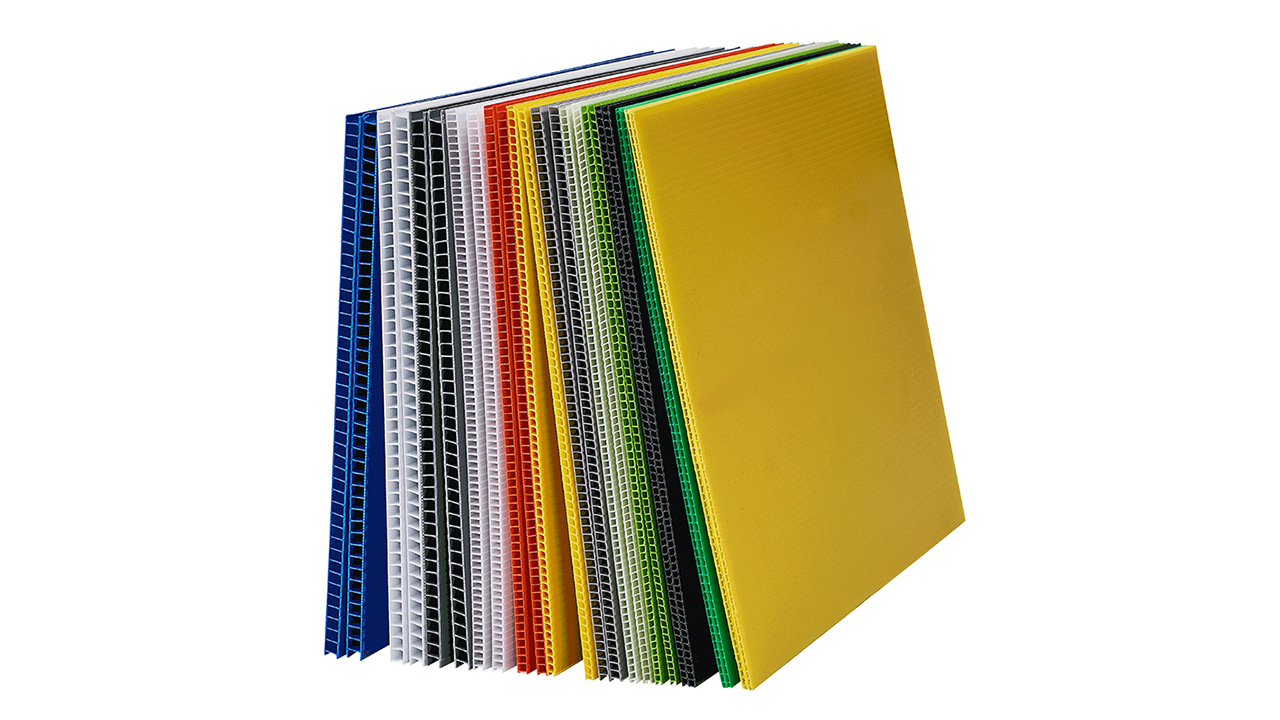
2. Advantages of Using Plastic Slip Sheets for Pallets
If you want to make your process of pallet shipment more efficient, you can start using plastic slip sheets for your needs. Let us look at the main advantages that you can gain through their use:
- Light weight:Instead of using heavy wooden pallets, you can switch to plastic slip sheets to cut down on the total weight of your shipments.
- Increased storage space:With their slim design, you can fit more sheets in the same space, thereby optimizing your storage area.
- Moisture resistance:Your slip sheets will be more resistant to moisture compared to wooden pallets, making them ideal for challenging shipping situations.
- Reduced transportationcost: You can minimize the dead weight of your shipments, which may help you reduce transportation costs, especially when you ship large volumes.
- Customization: Your choice of size, thickness, tab style, colors, and other aspects can be adjusted to your needs.
- Reusable:If you use them in the right way, then you will be able to reuse your slip sheets more than 30 times.
3. Types of plastic slip sheets for pallets.
If you are looking for plastic slip sheets for your pallets, it is important that you know about the different kinds of plastic slip sheets available.
3.1. Tab Plastic Slip Sheets
One-tab, two-tab, or four-tab plastic slip sheets can be selected depending on your push-pull equipment and load needs. Common thickness is between 0.5-3 mm. Your choice of tabs allows you greater grip flexibility and better efficiency during pallet handling and loading/unloading.
3.2. Heavy-Duty Plastic Slip Sheets
You can use heavy-duty HDPE or PP corrugated sheets for machinery and concentrated loads. Normal thickness is 1-5 mm. Your needed thickness should be based on your products weight, dimensions, and handling.
3.3. Smooth Surface Plastic Slip Sheets
Smooth HDPE or PP sheets can be used for easy pushing and pulling. The normal thickness varies between 0.5 to 3 mm. With your smooth surface, you reduce friction and make loading and unloading easier.
3.4. Anti-Static Plastic Slip Sheets
Anti-static plastic slip sheets may be employed for electronics/electrical items. Standard sheet thickness ranges from 0.5mm to 3mm. The surface resistance of the chosen material must match your requirements.
3.5. Freezer-Grade Plastic Slip Sheets
You can choose freezer-grade sheets for frozen food and cold storage purposes. Standard thickness would be 0.5-3 mm. The polymer you select must have appropriate flexibility and impact resistance at your temperature range.
3.6. Custom Plastic Slip Sheets
Your supplier can customize plastic slip sheets depending on your needs. This includes customization of size, thickness, tabs, color, texture, material used, printing, and recycling.
4. Important Factors for Selecting Plastic Slip Sheets
l Capacity / Weight
You need to know your maximum pallet load before you buy. Applications vary between 500–2,500 kg. Your supplier needs to confirm the tested capacity of your specific load and application.
l Thickness of Your Plastic Slip Sheet
You need to select the thickness depending on your load. 500–1,000 kg(0.5-1.0mm), 1,000–1,500 kg (1.0-1.5mm), higher loads might need 2-3+ mm.
l Handling Equipment
You need to make sure that the slipsheets will fit with the forklift attachments, palletizers, conveyors, or automation equipment that you use. You need to ensure that the tab design, location, stiffness, and sheet size are consistent with your handling equipment.
l Surface Finish and Treatment
It is important that you select smooth surfaces for easy sliding or textured, anti-slip surfaces for better load stability. It is also possible to have your supplier offer anti-static, UV resistant or printable surfaces.
l Sizes of Your Plastic Slip Sheet
The size of your slip-sheet should correspond to your product and machine. Some of the most common sizes are 1,219 × 1,016 mm (48 × 40 inches), 1,200 × 800 mm, and 1,200 × 1,000 mm.
l Weight Distribution
You should give information about how your products distribute their weight. For example, a 1,500 kg load evenly distributed is different from a heavy load. This information should be considered by your supplier.
l Sizes of the Pull Tab
The pull tab or lip is the 3-6 inch edge where your push-pull forklift attachment grabs onto. Depending on the direction of load entry in your warehouse, you may choose to order 1 to 4 side configurations.
5. How Much Do Plastic Slip Sheets Cost?
The cost of plastic slip sheets varies widely depending on the type of material used, thickness and number of units ordered. Costs of importation will be about US$1.50 to $3.65 each when ordering in large numbers. To get the cost estimates accurately, make sure that you request an import quotation stating your exact requirements such as your desired dimensions, tabs, order quantity, branding, and Incoterms.
6. Frequently Asked Questions
Q1: How does a plastic slip sheet keep your sensitive products safe from any damage?
The smooth plastic slip sheet will help you avoid damages to your bottom layer boxes, avoiding costly product rejection and insurance costs.You get rid of punctures, rips, and splinters that can happen because of the nails on wooden pallets and rough deck boards.
Q2: What will happen if your slip sheets are left outside in direct sunlight?
You will notice that your plastic slip sheets are becoming brittle, warped, and cracked owing to the extreme ultraviolet degradation. If you have to leave them outside, you must invest in sheets that contain UV inhibitors.
Q3: How come your plastic slip sheets have rough textures on one side and smooth ones on another?
Because you require two friction areas. The top layer has a higher coefficient of friction (over 0.5), which prevents your cargo boxes from moving. The bottom side is smooth (between 0.2 to 0.3) for easily sliding the loads across the floor.
Q4: Would your plastic slip sheets affect RFID scanning of tagged items in your warehouse?
No, you will get perfect signal transmission. Unlike wooden pallets that become wet and absorb radio waves, plastic slips are fully transparent to RFID scans.
Q5: Can you order flame-retardant plastic slip sheets for your high-risk facility?
Yes, you can get customized slip sheets that have been manufactured using halogen free flame retardants. This will make sure that the plastic used burns slowly or stops burning on its own.
7. Conclusion
Plastic slip sheets can be the perfect choice for making your shipping process more efficient and profitable. By selecting an optimal sheet thickness and tabs depending on your handling equipment, you can optimize the use of space in your warehouse. For more information, contact Purepack.